Chestnut crepes
a sweet and nutty breakfast canvas

If you, too, want delicious things to come easily, consider subscribing for more flavorful, nourishing, and simple recipes.
My favorite way to communicate with friends is through small, regular updates on what they are loving to cook and eat. Last week I received a voice memo from my friend Gaia that she had recently fallen obsessed with honey, quiche and champagne. We yap on about our shared love for whole milk; she sends photos of thick steaks wrapped in butcher paper, which I know are destined for Sunday dinner with her husband; I tell her about the freshly milled sorghum that just got dropped off at my door, imminently destined for chocolate chip cookies.
Gaia sent me a rough recipe for these chestnut crepes and they became an instant household classic. Aside from the chestnut flour itself, the ingredients for the batter likely already live in your fridge: whole milk, eggs, butter. No gluten, no grains, no refined starches, just the unadulterated nutty sweetness of chestnuts ground to flour! A revelation.
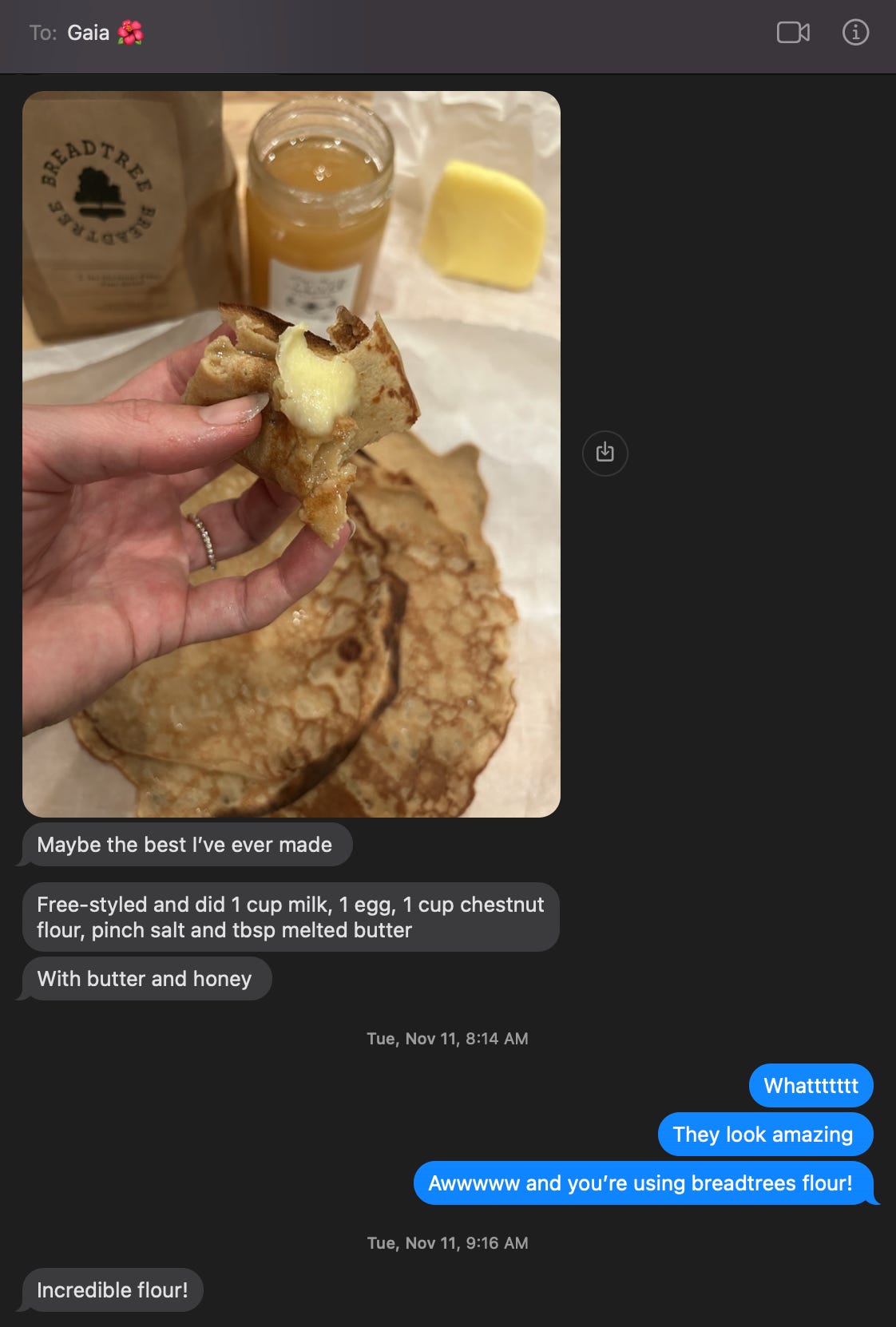
Chestnut Crepes
You can take the time to whisk your batter together in a bowl, diligently avoiding clumps of flour, though I much prefer a lower effort route and toss everything in a blender and go. The batter really benefits from an overnight rest - helping to make the crepe much easier to manage in the pan. The cooked crepes become more pliable if you let them rest for a while after cooking, a nice feature if you plan to fill and roll them. I keep a plate warm in the oven, ready to receive crepe by crepe as they cook. By the time you’ve cooked them all, the majority will feel relaxed and limber.
They are soft with crispy edges, nutty and surprisingly sweet…even when you eat them straight from the pan.
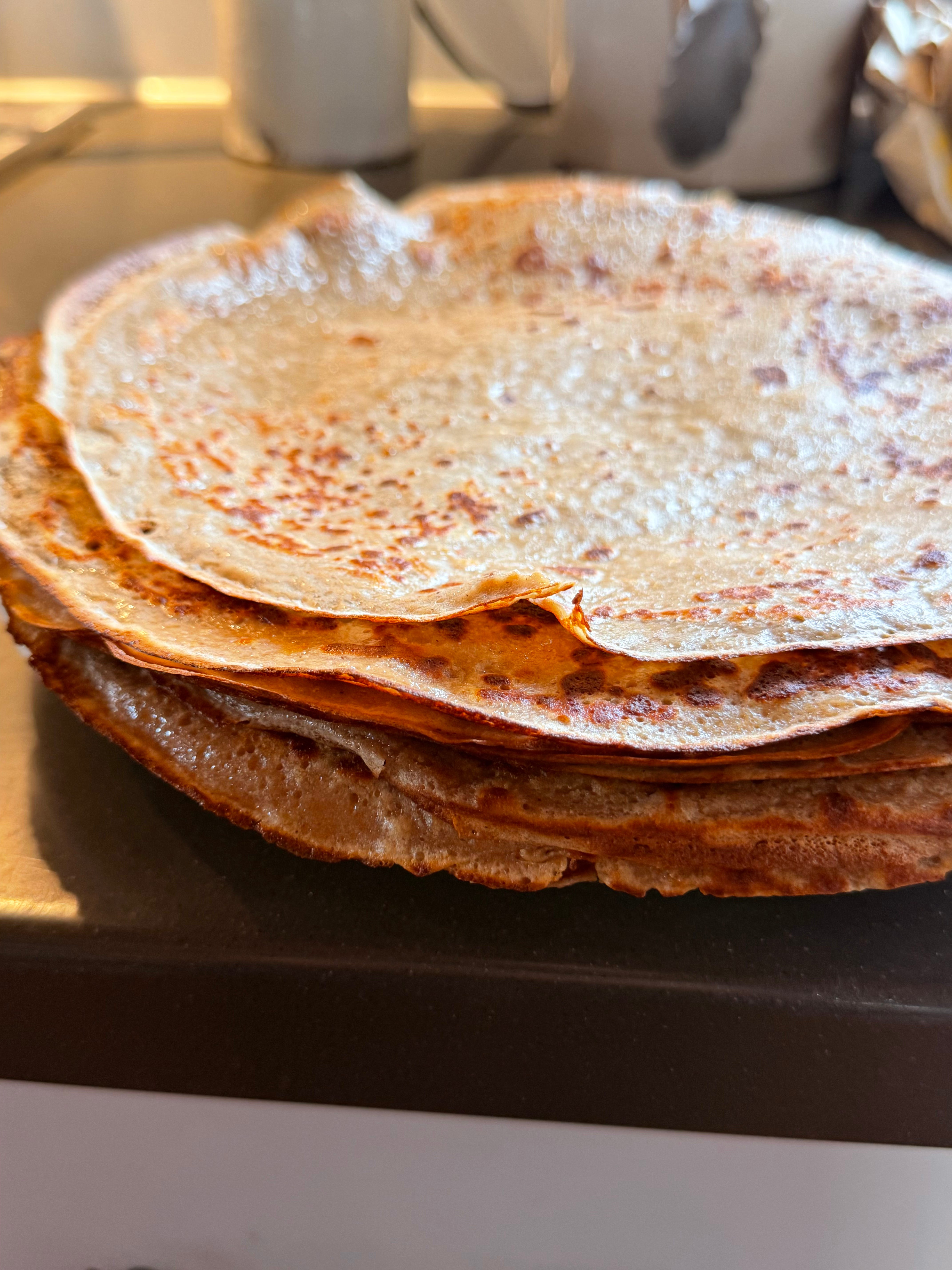
Makes 8-10 ten inch crepes
2 cups finely milled chestnut flour
2 large eggs, at room temperature
2 ½ cups whole milk, at room temperature
2 tablespoons butter, melted and cooled, plus more for frying
½ teaspoon fine sea salt
In a blender, combine all of the ingredients and blend on medium speed for 10-15 seconds, until you have a smooth and pourable batter with no visible clumps of flour. Set the batter aside to rest, covered, for at least 30 minutes or preferably overnight.
When ready to cook, heat a nonstick crepe pan or a well seasoned carbon steel pan over medium heat. Add a small pat of butter and tilt the pan to distribute it. The pan should be hot enough for the butter to bubble and melt upon contact, but not brown. Add a ¼ cup of batter to the pan and immediately tilt the pan in a circular motion to spread the batter evenly. Cook for about 2-3 minutes, or until the bottom is a nice golden brown and the crepe flips with little drama. If the batter tears when you try to flip it, it likely needs to cook for another 30 seconds or so. Cook on the other side for a minute, then transfer the crepe to a plate set in a warm oven. Continue with the remaining batter.
Serve with: a good jam; strawberries and ricotta; salted butter and honeycomb; soft scrambled eggs; smoked salmon and garlicky spinach; butter and cinnamon sugar.
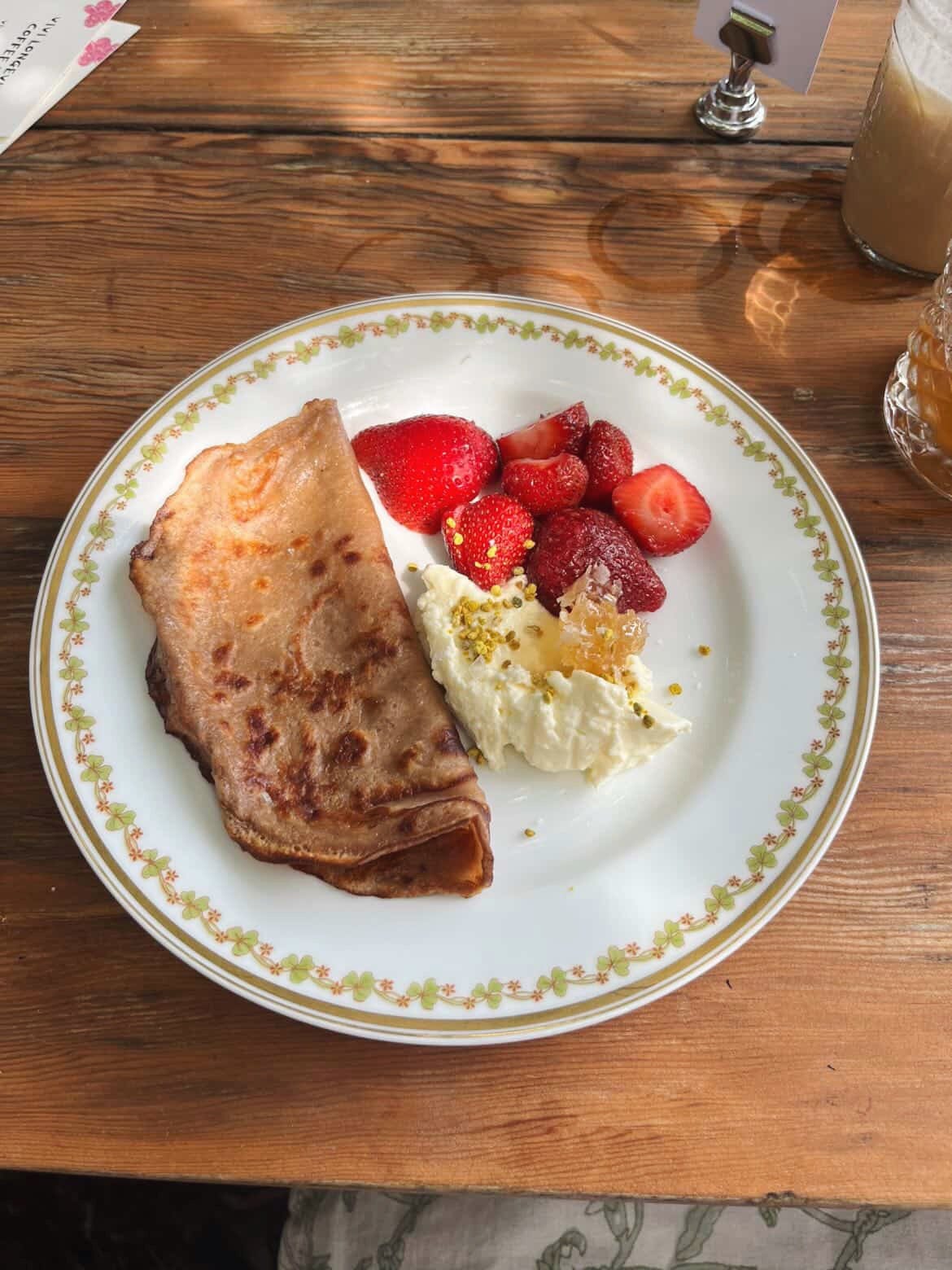
These crepes will only be as delicious as your chestnut flour. When shopping, try to look for a flour that advertises itself as slow cured and stone milled. I buy mine from Breadtree Farms, an impressive and admirable agroforestry project working to give chestnuts their rightful place back in the American pantry.
If you have an appetite for more than a delicious breakfast and want to learn more about how chestnuts can forge more sustainable foodways in the Northeast and beyond, read on here.
These look amazing. Have you ever made chestnut flour from fresh chestnuts? I have a 50 pound bag I’m working through!